
Malibu California History and Culture: A Story Most Visitors Miss
Before the celebrity compounds and surf culture, before the Pacific Coast Highway even existed, Malibu was home to one of the most sophisticated coastal civilizations in North America. Most visitors who drive through today see a 21-mile ribbon of stunning shoreline and little else. But the real history of Malibu runs thousands of years deep — and it’s far more layered, complex, and fascinating than the glossy postcard version suggests.
The Chumash: Malibu’s First and Longest Chapter
The Chumash people inhabited this stretch of Southern California coastline for at least 10,000 years before European contact. They weren’t simply “passing through” — they built permanent villages, developed sophisticated trade networks, and engineered one of the most remarkable watercraft in the pre-Columbian Americas: the tomol, a plank canoe sealed with natural tar that allowed them to navigate the open Pacific with remarkable precision.
The name “Malibu” itself is derived from the Chumash village of Humaliwo, meaning “the surf sounds loudly.” Listen closely the next time a set rolls in. They weren’t wrong.
Chumash villages dotted the Malibu Creek watershed and the coastline, sustained by the extraordinary abundance of this ecosystem — rich marine life, oak woodlands, and freshwater streams that still flow today. Their shell middens, some preserved in the Malibu bluffs, represent thousands of years of accumulated daily life. As you explore the coastline on the Wayfarer Journey Malibu audio tour, you’ll pass landmarks that carry invisible Chumash histories beneath their modern surfaces.
Spanish Missions and the Rindge Ranch Era
Spanish colonization in the late 18th century devastated Chumash communities through disease, forced labor at missions like San Buenaventura and San Fernando, and violent disruption of traditional life. By the mid-1800s, the Chumash population had been reduced to a fraction of its pre-contact numbers — one of the most catastrophic demographic collapses in California history.
Under Spanish and later Mexican rule, the Malibu land was carved into the vast Rancho Topanga Malibu Sequit, a 13,000-acre land grant that defined the region’s geography for generations. When California passed into American hands after the Mexican-American War, the land eventually fell to a Boston businessman named Frederick Rindge, who purchased it in 1891.
Rindge and his wife May had a singular obsession: keeping Malibu to themselves. They fought off railroad companies, trespassers, and even the state of California with a tenacity bordering on legendary. May Rindge — often called the “Queen of Malibu” — waged legal battles for decades after her husband’s death to maintain her private kingdom by the sea. She ultimately lost. The Pacific Coast Highway opened in 1929, and Malibu was suddenly, irreversibly, accessible.
Hollywood Discovers the Colony
May Rindge, facing mounting debt, began leasing beachfront parcels in the 1920s. Early tenants were largely artists and film industry figures drawn to the wild beauty and relative seclusion. The Malibu Colony — a small gated community along the beach — quickly became a retreat for Hollywood’s elite, cementing an association between Malibu and celebrity culture that persists to this day.
Stars like Clara Bow, Ronald Colman, and Barbara Stanwyck built modest beach cottages that bore little resemblance to the architectural statements lining the shore today. The Colony’s early culture was genuinely bohemian — a counterpoint to the formal glamour of Hollywood proper. That tension between wildness and wealth has defined Malibu’s identity ever since.
Surf Culture, Wildfires, and a Living Landscape
No honest history of Malibu California culture omits its surf heritage. By the 1950s, Malibu Surfrider Beach had become the epicenter of California surf culture, drawing pioneers who refined both technique and an entire lifestyle aesthetic that would radiate outward to influence global youth culture for decades. The long, perfect right-hand point break at Surfrider is still considered one of the finest waves in the world.
But Malibu is also a place that burns. Wildfires have swept through the Santa Monica Mountains repeatedly — in 1956, 1970, 1993, 2007, and most devastatingly in 2018 with the Woolsey Fire, which destroyed hundreds of structures and killed three people. The chaparral ecosystem here is adapted to fire; the human communities built within it continue to reckon with that reality in every dry season.
Hearing Malibu Differently
The Wayfarer Journey GPS audio tour is designed precisely for moments like this — standing at Surfrider Beach, or looking out from the bluffs above Point Dume, and hearing the deeper story beneath what your eyes are taking in. Malibu California history and culture doesn’t announce itself. It requires a little slowing down, a little listening. The surf, as the Chumash knew, has always been sounding loudly here. The question is whether we stop long enough to hear what it’s saying.
Experience It Yourself
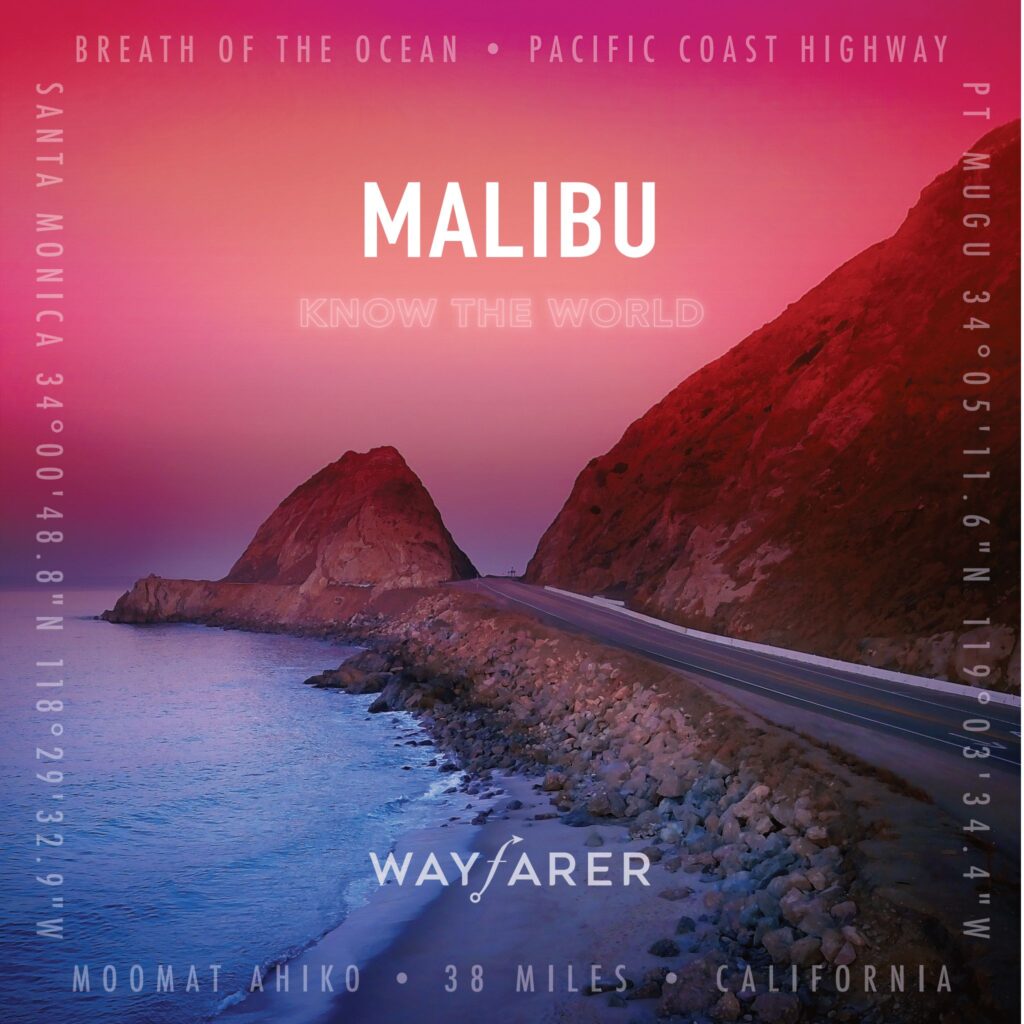
Explore this destination with Wayfarer Journey’s MALIBU GPS audio tour — stories, history, and hidden gems right in your ear as you go.


 by xotatech.com